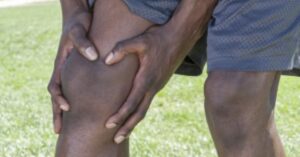
Physical Therapy for Knee Pain
Physical Therapy for Knee Pain The knee is the biggest joint in the human body—and with good reason. After all, it has a pretty big job to do given that

Your knees carry you through life, literally. They’re one of your body’s largest and most complex joints, connecting your thigh to your lower leg through an intricate system of bones, tendons, ligaments, cartilage, and fluid sacs that all work together to let you walk, run, climb, and move freely.
When any part of your knee becomes damaged or worn down, even simple activities can become painful and frustrating. Walking up stairs, kneeling down to play with your kids, or getting in and out of your car can suddenly feel impossible. For athletes and active individuals, knee pain can feel especially devastating, keeping you from the sports and activities that matter most to you.
Our expert physical therapy for knee pain focuses on reducing inflammation, restoring strength and stability, and improving your range of motion. We don’t just treat your symptoms; we address the root cause of your knee pain so you can return to your normal activities with confidence and without limitations.
Whether your knee pain came from an injury, overuse, or arthritis, we’ll create a personalized treatment plan to get you back on your feet and moving pain free.
Also referred to as degenerative joint disease (DJD), arthritis of the knee as common as it is debilitating. While there is no cure for DJD there are many treatment options available to preserve joint strength, range of motion, and function while reducing pain.
Common Causes of Knee Arthritis:
Common Signs and Symptoms of Knee Arthritis:
Ligaments are the structures that connect bones to adjacent bones and provides essential stability to the joints throughout the body. The ligaments of the knee are susceptible to sprains and tearing from a wide variety of activities and are often vulnerable to trauma. With proper management, physical therapy can help to restore normal flexibility and durability to the ligaments of the knee while also reducing the potential for future knee injury.
Common Causes of Ligament Sprains of the Knee:
Common Signs and Symptoms of Ligament Sprains of the Knee:
The knee’s shock absorbers are the medial and lateral meniscus. They function to help lubricate the knee joint and prevent the knee from hyperextending. A wrong twist of the knee or an accidental overflexing can tear this important joint cartilage.
Common Cause of Meniscus Tears:
Common Signs and Symptoms of Meniscus Tears:
70 percent of all runners will experience some type of injury. This one, “Runner’s Knee,” is the most common. Despite being relatively common amongst runners this disorder can be easily misdiagnosed. Early evaluation and intervention by a trained physical therapist can help to reduce pain and dysfunction while also decreasing the potential for arthritic changes from prolonged injury.
Common Causes of Patellofemoral Pain Syndrome:
Common Signs and Symptoms of Patellofemoral Pain Syndrome:

Physical Therapy for Knee Pain The knee is the biggest joint in the human body—and with good reason. After all, it has a pretty big job to do given that

The knee is among the most commonly injured areas of the body treated in physical therapy. Commonly knee pain may be caused by injuries such as strains and sprains, fractures,
Osteoporosis is a disease where the bones have very little density. It is a condition where either the bone is degenerating too quickly or is the result of not being