
29 Jul Physical Therapy for Spinal Stenosis Series (Part 1)
What is Spinal Stenosis?
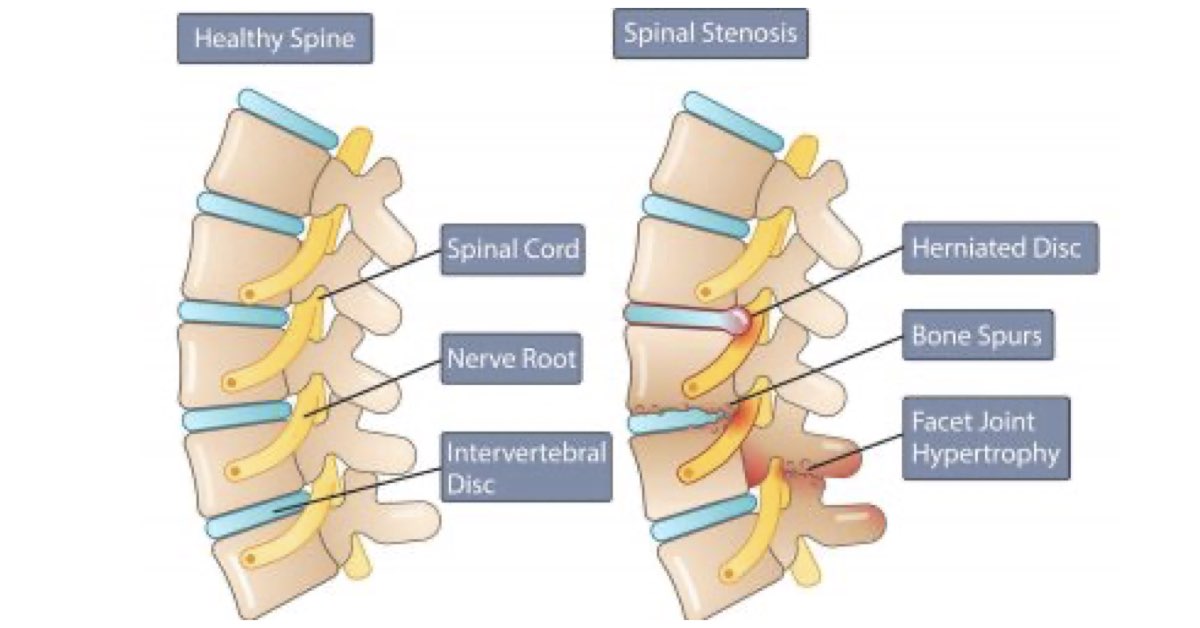
One of the more common spinal conditions seen in physical therapy is spinal stenosis. Spinal stenosis is a narrowing within the vertebrae of the spinal column that results in too much pressure on the spinal cord (central stenosis) or nerves (lateral stenosis). Spinal stenosis may occur in the neck or in the lower back. Those with spinal stenosis affecting the neck (cervical stenosis) may report local neck pain in less severe cases, but more advanced cases can include pain, numbness, tingling, and weakness in the arms. In very advanced cases, these complaints can also extend into the torso and legs, resulting in loss of balance and even bowel/bladder dysfunction. When spinal stenosis is diagnosed in the lower back (lumbar stenosis) patients will report local back pain but can experience sciatica, numbness, tingling, and weakness into the legs. As in cervical stenosis, those with the most severe symptoms can also report instability when walking and even abnormal bowel/bladder function. When diagnosed early, physical therapy can be very effective in resolving complaints related to spinal stenosis
The most common causes of spinal stenosis are related to the aging process in the spine:
Osteoarthritis is a deterioration of the cartilage between joints. In response to this damage, the body often forms additional bone (called “bone spurs”) to try to support the area. These bone spurs might press on the nerves where they exit the spinal canal.
Normal aging can result in a flattening of the disks (called degenerative disc disease) that provide space between each set of vertebrae. This narrow space leaves less room for the nerve to exit the spinal cord. Spinal injuries, diseases of the bone (such as Paget’s disease), spinal tumors, and thickening of certain spinal ligaments also may lead to spinal stenosis. Disc herniations can also result in stenosis.
In most cases, symptoms of spinal stenosis can be effectively managed with physical therapy and other conservative treatments. Physical therapists will prescribe specific stretching and strengthening exercises to relieve the pressure placed on the spinal column. In some instances, your physical therapy treatment may require your therapist to manually assist you with certain stretching exercises to achieve the fastest results. Only the most severe cases of spinal stenosis need surgery or spinal injections.
If you think that you may need physical therapy to address your spinal stenosis, contact the PT’s at Buffalo Back and Neck Physical Therapy. We are the area’s leading experts in treating back and neck pain.
Sorry, the comment form is closed at this time.